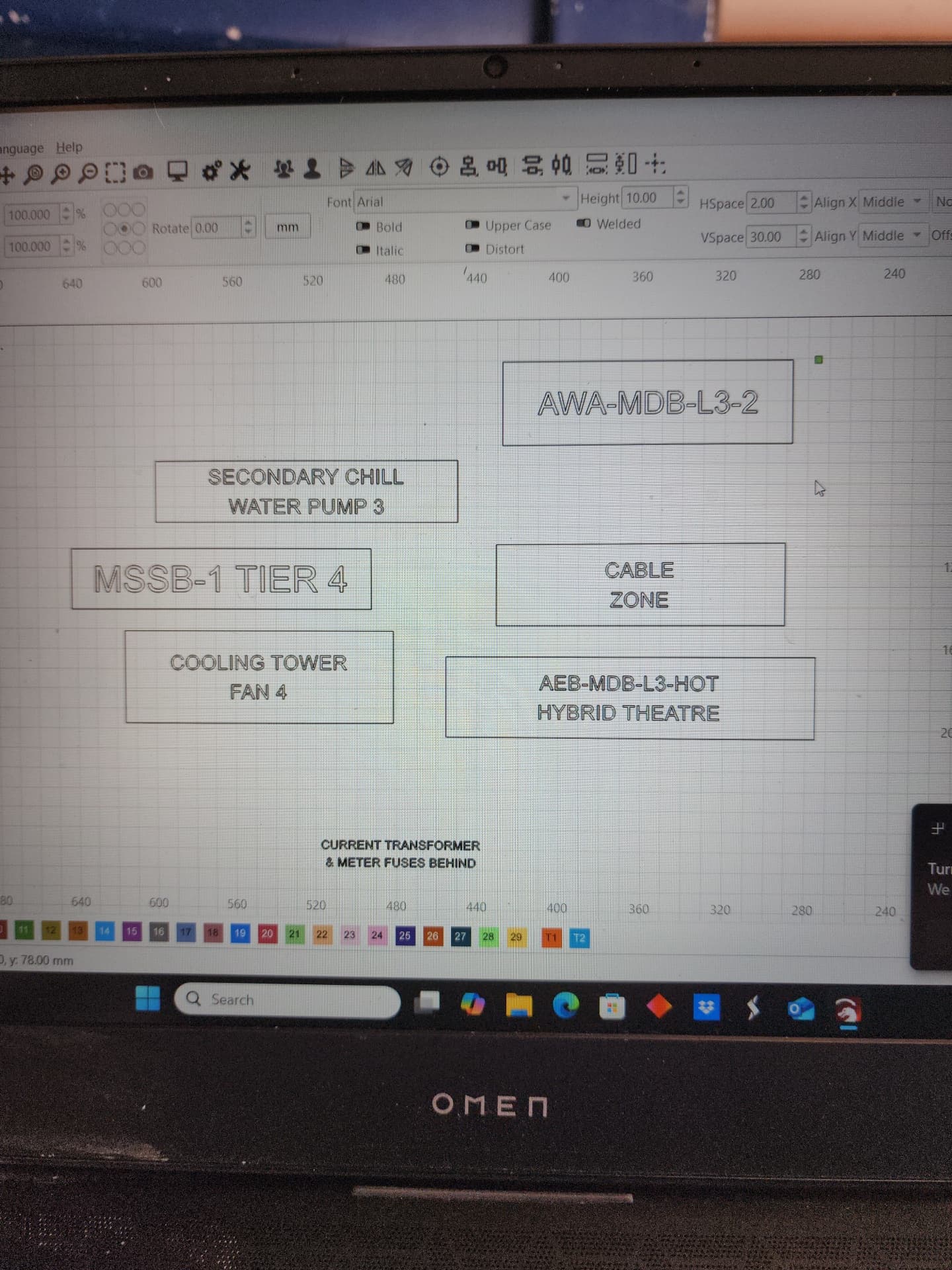
Traffolyte and acrylic get talked about like they are rival materials, and plenty of pages online will tell you one is "better" than the other. Most of that framing is wrong, because it compares a trade name with a chemistry. Here is the straight version: traffolyte is the Australian trade name for engraved multi-ply label laminate, and most traffolyte made today is acrylic-based.
So the real question is not "traffolyte or acrylic?" It is "engraved label laminate, or solid display acrylic?" Those are two different products for two different jobs, and we make both.
What traffolyte actually is
Traffolyte started life decades ago as a brand name for phenolic sheet built up in coloured layers. The name stuck and became the generic word Australian electricians use for any engraved sandwich-layer label: a thin cap colour over a contrasting core, engraved through the cap so the text shows in the core colour. White on black, black on white, white on red for danger labels.
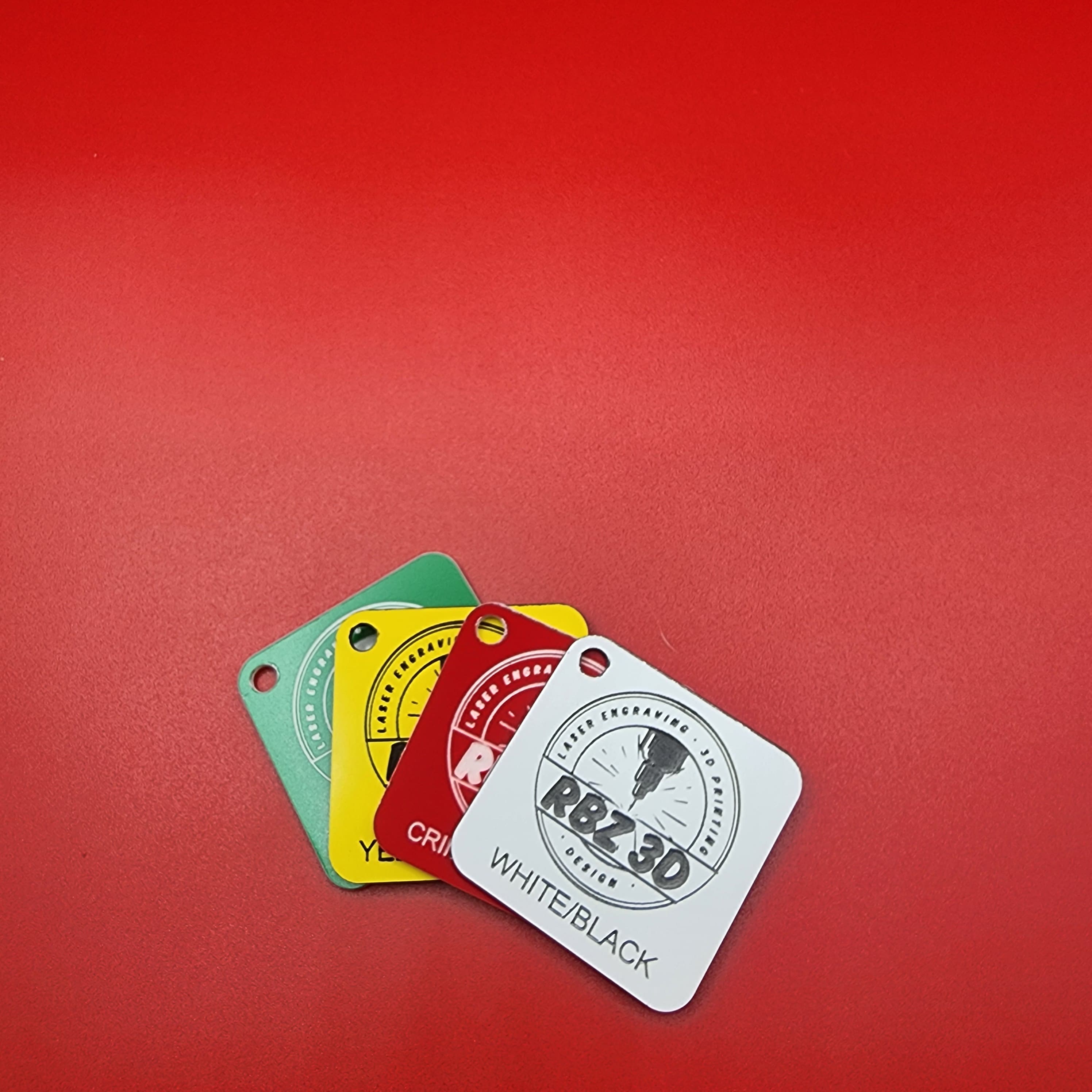
The chemistry inside that sandwich has moved on. Modern engraving laminates are mostly modified acrylic, with phenolic-resin grades still around for specialised uses. The sheet we engrave is Rowmark LaserMax, a two-ply laminate made specifically for laser engraving: an ABS cap layer bonded to an acrylic (PMMA) core, engraved through the cap so the core colour shows. It is what the trade means by traffolyte today: same layered construction, same engraved contrast, cleaner laser finish than the old phenolic stock.
In other words, "traffolyte is not acrylic" is a myth. Most of it is. What matters is the layered construction, not the resin.
What people mean by "acrylic" labels
When someone says acrylic in the signage world, they usually mean solid cast acrylic: the clear or solid-colour sheet used for shopfront signs, plaques, awards and architectural lettering. It is a single colour through its full thickness, typically 3 to 10 mm, and engraving it produces a subtle tone-on-tone mark unless the engraving is paint-filled.
That is a different product from label laminate. Not worse. Different. A brushed-look reception sign wants 5 mm cast acrylic with stand-offs. A circuit label wants 1.6 mm two-ply laminate with engraved contrast you can read at a glance from across the room.
Which product for which job
| Job | Right product | Why |
|---|---|---|
| Switchboard and circuit labels | Engraved laminate (traffolyte) | High contrast, engraved not printed, stays legible for the life of the board |
| Equipment, pump and plant ID | Engraved laminate | Durable outdoors, screw or adhesive fix, easy to read |
| Valve tags and cable tags | Engraved laminate | Thin, tough, drilled or tied on |
| Reception and door signage | Cast acrylic | Thicker, premium look, suits stand-off mounting |
| Plaques and presentation pieces | Cast acrylic | Depth and finish matter more than at-a-glance contrast |
For electrical work, engraved laminate is the standard choice for a practical reason: AS/NZS 3000 expects switchboard and circuit identification to be legible and durable, and an engraved two-ply label delivers that without fading, peeling or relying on printed ink. That is why it has been the default on Australian boards for decades, whatever resin happened to be inside the sheet at the time.
Thickness, colours and fixing
Our standard engraved labels are 1.6 mm two-ply laminate. That is rigid enough to screw to a board or bond with industrial adhesive, thin enough to fit escutcheons and gear without fouling. Standard colourways cover the usual electrical conventions: white on black, black on white, white on red, white on blue, black on yellow and more.
Solid display acrylic runs thicker and is quoted per job, because sizes, colours and mounting vary so much more than labels do.
The short answer
If you are labelling switchboards, machinery, valves, cables or anything that needs to stay readable in service, you want engraved label laminate. You can design and price those online in a few minutes, from one label with no minimum order.
If you are after solid acrylic signage, plaques or display work, send us the brief and we will quote it. Same laser, same care, different sheet on the bed.