
Phone photo is fine · Priced in one business day · No artwork charge
Send a photo of the old label.
Get the same label back.
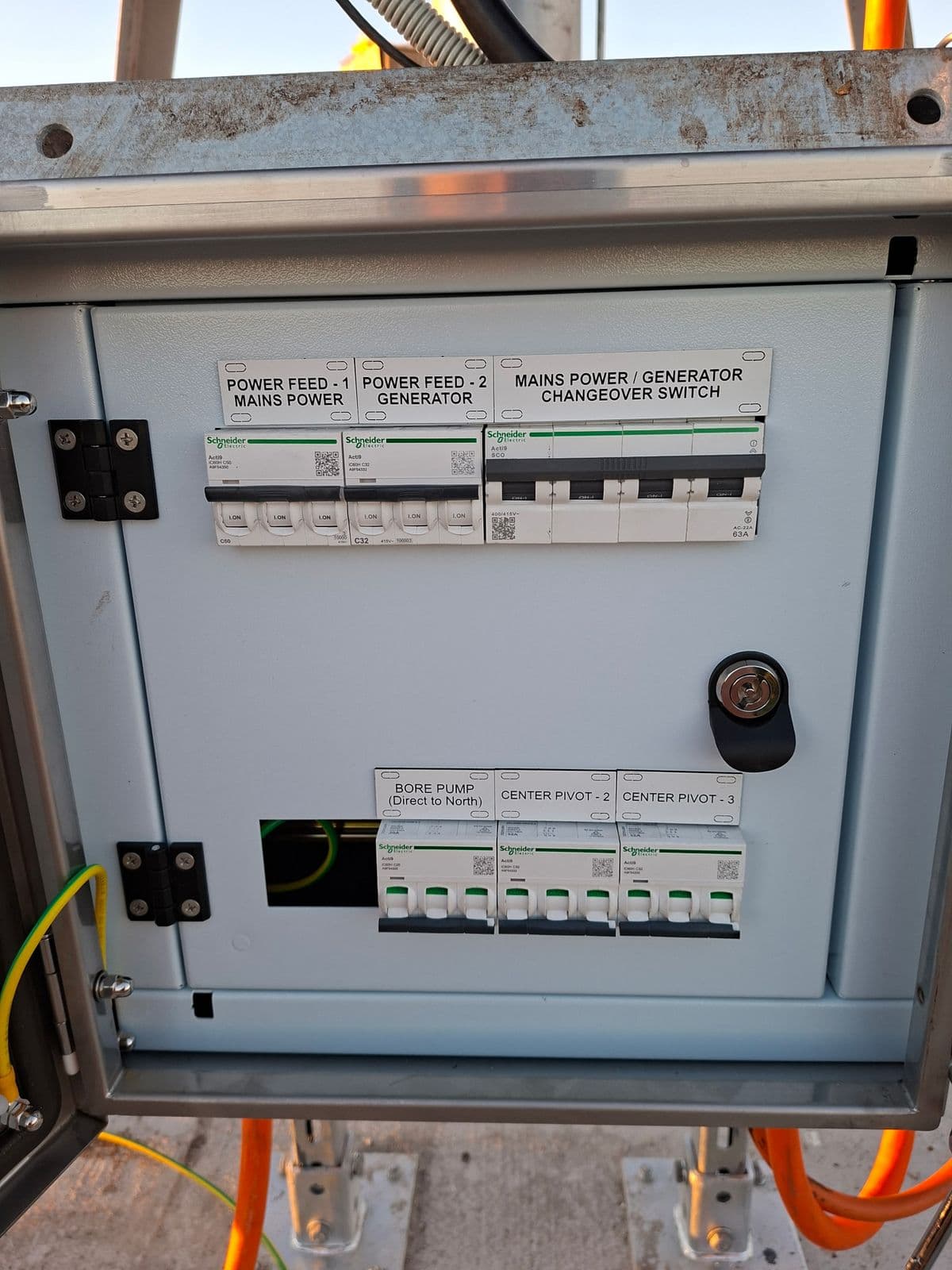
A replacement label from a photo is an engraved label recreated from a photograph of an existing one — the text, size, layout and colour are read off the picture and cut into new traffolyte, so a damaged label can be replaced without the original artwork or a drawing.
Faded, cracked, painted over, or snapped off during an upgrade — photograph what's there and we remake it. Size, text, layout, colour, fixing and cutouts all matched. Reading the photo and setting the artwork costs nothing; you pay for the labels.
- Customer rating
- 5.0 from 22 reviews
- No artwork
- No artwork charge
- No minimum
- No minimum order
- Priced in
- Priced in 1 business day
- Licensed
- Licensed electrician
- Australia-wide
- Australia-wide tracked shipping
How it works
Four steps, one of which is taking a photo.
There is no artwork to supply, no drawing to find, and no file to export. If you can photograph the label, that is the hard part done.
01
Photograph it
A phone photo is fine. Square-on, in focus, with something of a known size in frame if you can manage it. If the board is open, one wide shot of the whole board plus a close-up of the label you want copied covers it.
02
Send it through
Attach it to the quick quote form — images, PDFs and CAD files all accepted, up to 20MB each. Add the circuit list if you have one; if you don't, the photo is enough to start.
03
We read it and price it
Josh works out the size, transcribes the text, matches the colour and layout, and comes back with a price. Normally within one business day. Nothing is charged for the reading or the setting.
04
Approve, then it's engraved
You get the artwork back to check before anything is cut. Once you're happy, production is 1–3 business days and it ships tracked Australia-wide from Townsville.
What gets matched
Everything the old one had.
A replacement that doesn’t match is worse than no replacement — it draws the eye straight to the one label that’s different. Here is what comes off the photo and how.
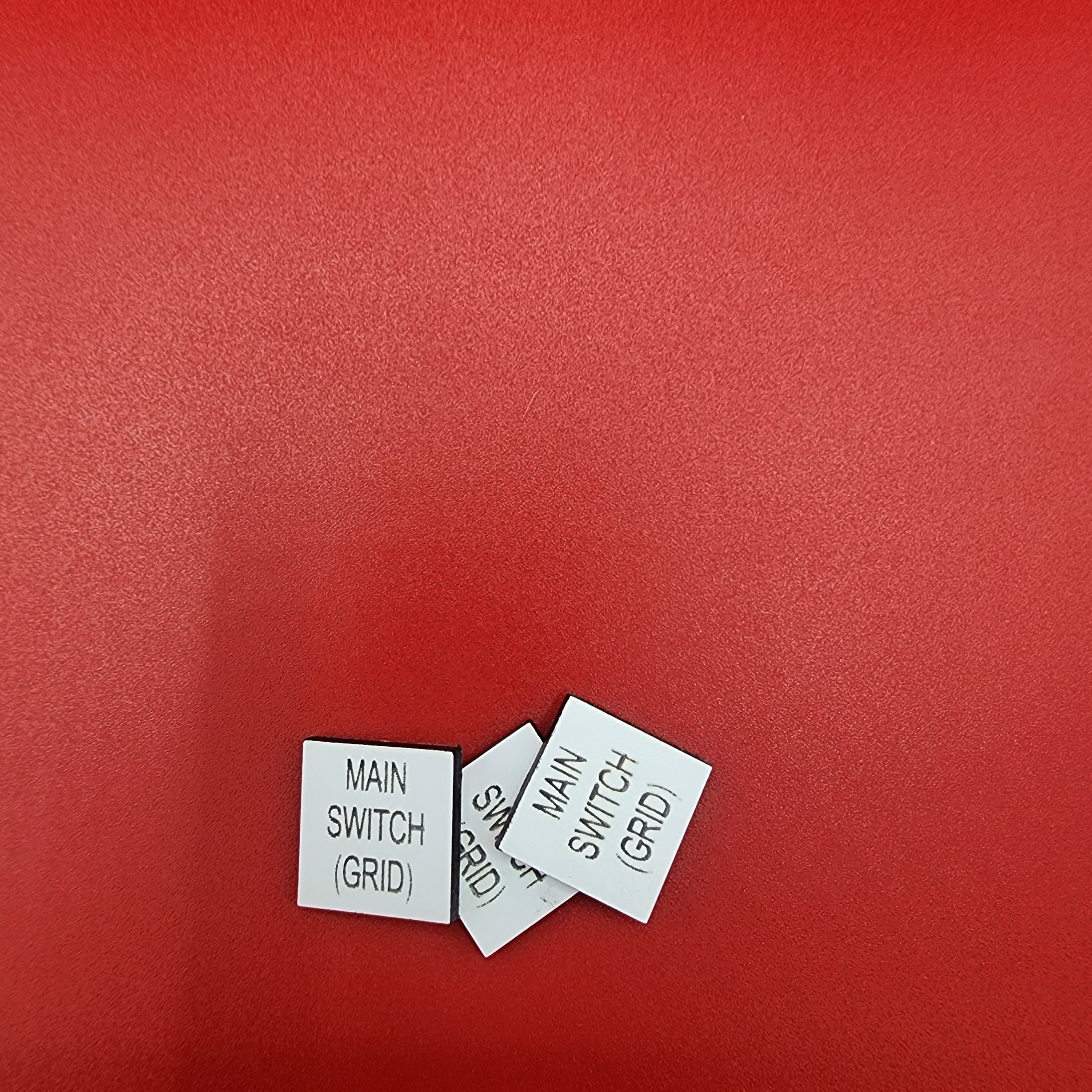
- Size
- Put anything of a known size in the shot — a tape, a 20c piece, the breaker itself — and the label scales off it. Without a reference we measure from standard breaker widths and confirm the dimensions with you before engraving.
- Text
- Transcribed exactly as it reads, including abbreviations and the odd spelling that matches the rest of the board. If part of it has gone, we flag the gap rather than guessing at it.
- Layout
- Line breaks, centring, how the text sits in the space. A replacement that reads differently to the twelve labels either side of it is the thing people notice.
- Colour
- Matched to the standard engraving laminate combinations — black on white, white on black, white on red, black on yellow, white on blue, white on green — the AS 1319 conventions the trade already reads.
- Fixing
- Self-adhesive backing, drilled holes on your existing centres, or slots for cable ties. If the old one was screwed on, the new one lines up with the same holes.
- Shape and cutouts
- Radiused corners, circles, tombstones, and cutouts for switches and lamps — the profile is matched along with everything else.
The hard cases
When the label is past reading.
Most of the labels we’re asked to replace are being replaced because they failed. Sun-bleached printed schedules, labels painted over during a switchroom repaint, engraving worn flat by twenty years of hands, or a board upgrade that left the old set the wrong width. A photo of a perfect label is the easy version of this job.
Faded past reading
Send the board photo and the circuit schedule together. The schedule supplies the words, the photo supplies the sizes and positions, and between them the set gets rebuilt.
Painted over
The outline usually survives even when the text doesn't, which gives us size and fixing centres. The wording comes from the schedule or from you.
Half the set missing
We match the survivors — same size, same colour, same layout — so the replacements sit in with the originals rather than announcing themselves.
Nothing legible at all
Then we say so and ask, rather than guessing. Wording on a switchboard is the responsibility of the licensed person doing the work, and inventing it is not our call to make.
What it costs
You pay for labels. Not for us reading a photo.
Reading the photo, working out the size, transcribing the text, matching the colour and setting the layout are part of quoting the job. They are not a setup fee, an artwork fee, a redraw fee or a minimum order, because none of those exist here.
No minimum order
One replacement circuit ID is a normal order. So is four hundred.
No setup or artwork fee
Setting a label from your photo is included in the quote.
Volume pricing
Per-label cost falls with quantity — a whole board is priced as a set.
Want the numbers before you send anything? The label price list is published, and the online designer prices any size live as you type.
What customers are saying
See all →“As soon as I had put my order in, Josh was on the phone to me to adjust a few things to make sure it was 100% right. Couldn’t ask for better service and transparency from designing all the way to picking up the labels.”
“QUICK TURNAROUND, VERY PROFESSIONAL AND ACCURATE”
“Everything was easy from ordering to delivery”
“My order was processed quickly and the final product met or exceeded my expectations.”
“Great Product and Great Service. The product was delivered very quickly also. Highly Recommend!”
“Thank you for doing the tags at such short notice. Josh and team are highly recommended.”
Standards framing
Straight about what a label can claim.
AS/NZS 3000 clause 2.8 asks that switchboard labelling be permanent, legible for the life of the installation, and clear about which circuit and equipment each label identifies. Engraved traffolyte meets the durability and permanence requirements of that clause, because the text is cut into the material rather than printed onto it — there is no ink to fade and no film to lift.
What we will not tell you
- ·That the material is “certified” or “approved”. There is no certification scheme for engraving laminate and no inspector approval scheme for labels. A supplier using those words is selling you a word.
- ·That a label makes an installation compliant. Compliance is the installation, the documentation and the person who signed it — a label is one durable part of that.
- ·What your board should say. Josh holds an electrical licence and is happy to talk it through, but the wording call belongs to whoever is responsible for the job.
Common questions
Quick answers.
Can you really make a label from just a photo?
Yes — it is one of the most common ways orders arrive here. A photo tells us the text, the layout, the colour combination, the shape and roughly the size. We confirm the dimensions with you before engraving, so the only thing a photo can't settle on its own is measurement, and that is a single question rather than a barrier.
What if the old label is faded or unreadable?
Then we work from what's around it. A photo of the open board plus the circuit schedule, or the breaker arrangement itself, is usually enough to reconstruct what the label said. Where something genuinely can't be recovered we tell you which line is missing and ask — we won't invent wording and engrave it.
Do I need to know the size?
No. If you include something of a known size in the photo — a tape measure, a coin, a breaker of a standard width — we scale off it. If you'd rather measure, width and height in millimetres is all we need. Either way the dimensions are confirmed with you before anything is cut.
Is there a minimum order for a replacement label?
No. One label is a normal order. There is no minimum quantity, no setup fee, and no artwork charge for reading a photo and setting the label — you pay for the label itself. A single replacement circuit ID is a few dollars.
What does it cost to have the artwork redrawn?
Nothing. Reading the photo, transcribing the text, matching the colour and setting the layout are part of quoting the job, not a separate line on the invoice. The price you get back is for the engraved labels.
Can you match a label that isn't traffolyte?
We can match the appearance, size and layout in engraving laminate, which is what the trade uses for switchboard and plant labelling. If the original was a printed or vinyl label, the engraved replacement will outlast it — the text is cut into the material rather than printed on top, so there's no ink to fade and no film to lift. If the original was stainless or anodised, tell us and we'll say honestly whether we can match it.
How many labels can I send at once?
As many as you like. A single photo of an open board can produce a full set of circuit IDs — that is routine work. Send the wide shot plus the circuit list and the whole board comes back priced as one job, with volume pricing across the set.
How long does it take?
Pricing normally comes back within one business day. After you approve the artwork, production is 1–3 business days, then tracked post Australia-wide. StarTrack Premium is available at $35 if it's urgent — it reaches most places in 1–2 business days after dispatch, though we don't guarantee transit times.
Got the old label in front of you?
Photograph it. We'll do the rest.
A phone photo, a circuit list, or both — send it through and it comes back priced, normally within one business day. No minimum, no setup fee, no artwork charge.
or call Josh directly on 0432 736 559