
Australia-wide · Set from your study data · Proofed before engraving
Arc flash labels with
your calculated data.
Engraved to last.
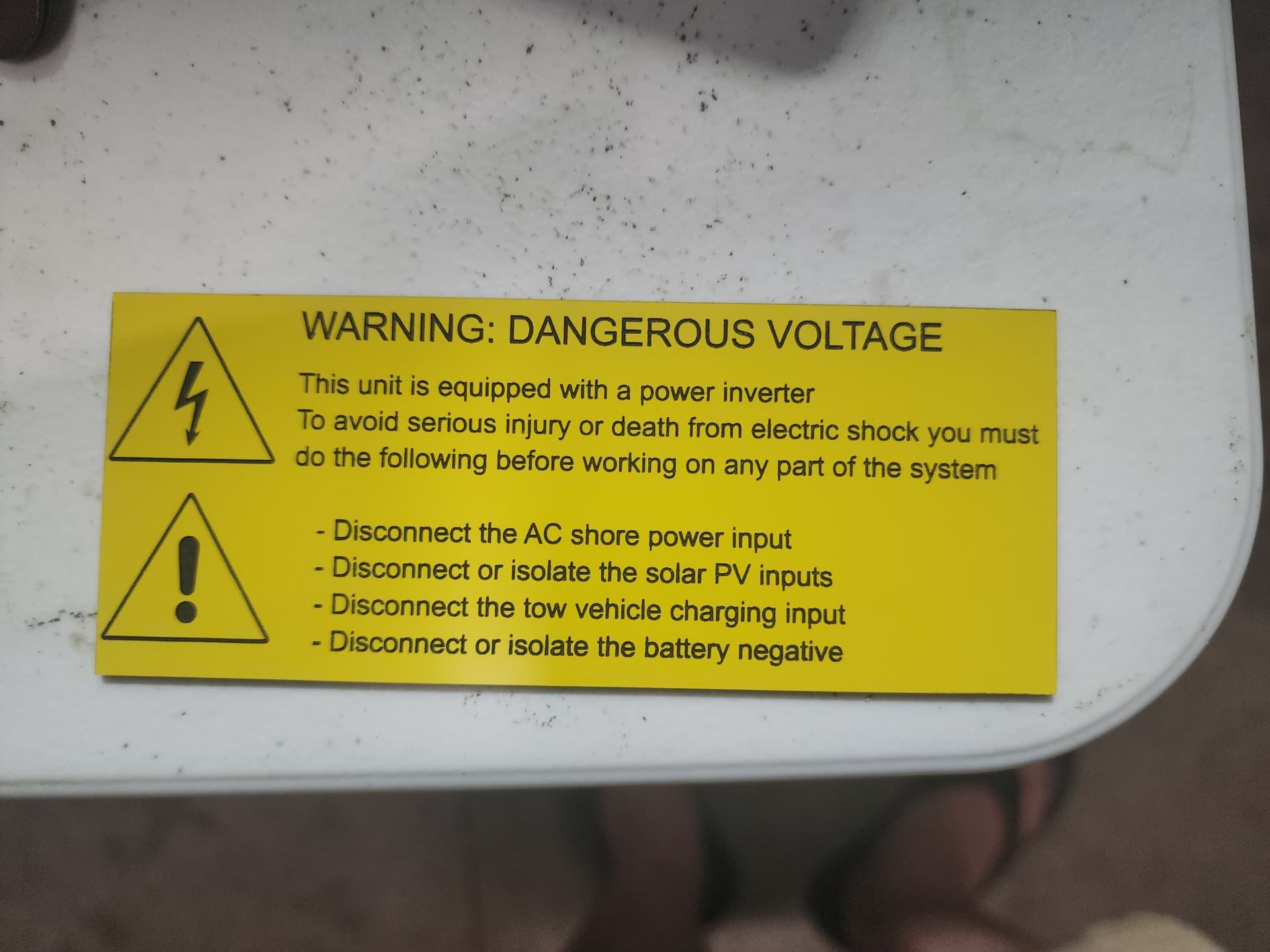
An arc flash label is an engraved warning label fitted to switchboards and MCCs showing the calculated incident energy, arc flash boundary, PPE category, and study date from an arc flash hazard study. On engraved traffolyte the data is cut into the material, not printed on.
Send the output spreadsheet from your arc flash hazard study and we set every label from it: incident energy, boundary, PPE category, study reference. Proofed before engraving, shipped sorted per board. No re-typing between the study and the switchboard.
- Customer rating
- 5.0 from 24 reviews
- Set from
- Set from your study data
- No minimum
- No minimum order
- 1–3 day
- 1–3 day production
- Licensed
- Licensed electrician
- Australia-wide
- Australia-wide tracked shipping
Order directly
Type your study data. Watch the label build itself.
Fill in the numbers from your arc flash hazard study, pick a size and colour, and add the engraved label straight to your cart: live preview, live price, no quote round-trip.
True-to-scale preview · 150 × 100 mm engraved Crimson/White
Live pricing unavailable right now. Try the full Label Designer instead.
More than a few boards? Upload the study spreadsheet instead. We set every label from your data, send proofs, and price the whole set on volume.
What goes on the label
The fields your study produces. Field by field.
An arc flash hazard study calculates a data set for every switchboard and MCC, and the label puts that data at the board. Here is what each field is and where it comes from.
| Field | Units | Where it comes from |
|---|---|---|
| Incident energy | cal/cm² | The calculated thermal energy a worker would be exposed to at the working distance. This is the headline number of the arc flash hazard study. Every board gets its own calculated value. |
| Arc flash boundary | mm or m | The distance from the arc source at which incident energy falls to the onset of a second-degree burn. Calculated per board in the study; unqualified persons stay outside it. |
| PPE category / minimum arc rating | category or cal/cm² | The personal protective equipment required to work on the board energised, selected from the calculated incident energy by the method your study or site PPE matrix uses. |
| Working distance | mm | The assumed distance between the worker and the arc source used in the calculation, typically 450–600 mm depending on equipment class. Stated so the incident energy figure can be interpreted correctly. |
| Nominal voltage | V | The system voltage of the equipment, taken from the single-line diagram. Confirms which board the label belongs to and what shock protection applies alongside the arc flash data. |
| Study date + reference | date / report no. | When the arc flash hazard study was performed and the report it came from. The label is only as valid as the study behind it, so the reference has to survive on the board. |
| Next review date | date | When the study is due for review, if your study or site spec gives a date. On the label, an out-of-date figure is easy to spot. |
Field lists vary between utilities and sites. We engrave whatever your study and specification call for. Background reading: the full guide to arc flash warning labels in Australia.
Engraved vs printed
Calculated data has to outlive vinyl.
The problem with printed
Vinyl and printed polyester arc flash labels fade, chalk, and peel, especially on outdoor boards, in plant rooms, and near heat. The incident energy figure that cost thousands of dollars of engineering to calculate becomes unreadable long before the study is due for review.
Why engraving is different
Engraved traffolyte has the text laser-cut through a coloured surface layer into the contrasting core. There is no ink to fade and no print to rub off. The data is physically part of the label.
The reading test
An arc flash label only does its job if the next person can read it. A label that has faded to a yellow ghost is no use, whatever it said when it was installed, and means a relabelling job.
Built for switchboards
Traffolyte is a common material for switchboard circuit IDs and warning labels. It handles UV, heat, cleaning chemicals, and plant-room humidity. Read more on the dedicated traffolyte labels page.
The workflow
From study to switchboard.
- 1.Send the study output. Your consultant or engineer exports the results spreadsheet, one row per switchboard or MCC, and uploads it through the Quick Quote form.
- 2.We set every label from the data. A consistent, matched layout across the whole set, populated straight from your spreadsheet: no re-typing, no transcription errors between the study and the board.
- 3.Proofs before engraving. You (or your consultant) approve exact previews of every label before the laser touches material.
- 4.Engraved, sorted, shipped. Labels are engraved in traffolyte, labelled and sorted per board, and shipped tracked Australia-wide, ready to fit straight onto the installation list.
Why it works
Every other step of an arc flash study is engineered. Then the labels get re-typed by hand into a sign shop order form. Setting labels directly from the study spreadsheet closes that gap: the number on the board is the number in the report.
Every label is engraved to order in Townsville, Queensland by a licensed electrician, with 1–3 business day production and tracked shipping Australia-wide. Average label price is about $3.13 inc GST, with volume pricing across full study sets. See how it compares on the electrical labels page.
For arc flash consultants
Your study. Our engraving.
Every arc flash study ends with a set of physical labels, and most consultancies would rather not manage engraving quotes, proofs, and freight on top of the engineering. We act as the fulfilment arm: you deliver the study, we deliver the labels.
- White-glove per project
- One contact per project. We take the raw study output, set the labels, run proofs past you or your client, and ship sorted per board. You stay the engineer, not the sign broker.
- 30-day trade accounts
- Invoice per project on 30-day terms instead of paying by card per order, so label fulfilment fits how your practice already bills.
- Volume pricing
- Full study sets price on volume across the whole job, and repeat projects keep their layouts on file. The second study you send is faster than the first.
Standards framing
Straight about what a label can claim.
In its audits of the Solar Victoria heating and cooling program, Energy Safe Victoria lists circuit breakers not labelled to show what they supply as a common defect, under AS/NZS 3000:2018 clause 2.10.5.2. Its test is whether a person can “readily identify the equipment supplied and the corresponding circuit protective devices”. Engraved traffolyte has the text cut into the material rather than printed onto it. There is no ink to fade and no film to lift.
What we will not tell you
- ·That the material is “certified” or “approved”. None of the regulator pages we have read approves a label material. A supplier using those words should be able to show you the document.
- ·That a label makes an installation compliant. Compliance is the installation, the documentation and the person who signed it. A label is one durable part of that.
- ·What your board should say. Josh holds an electrical licence and is happy to talk it through, but the wording call belongs to whoever is responsible for the job.
Common questions
Quick answers.
What must be on an arc flash label in Australia?
The field list comes from your study and your site or client spec. Study outputs usually give incident energy (cal/cm²), arc flash boundary, PPE category or minimum arc rating, working distance, nominal voltage, the study date and report reference, and sometimes a review date. We engrave from your study output rather than a fixed template, so the label carries what your study and spec ask for.
Why engraved instead of printed arc flash labels?
An arc flash label carries calculated data that has to stay readable until the study is redone, in plant rooms, pump stations, and outdoor switchboards. Printed vinyl fades, peels, and chalks in UV and heat. Engraved traffolyte has the text cut through the surface layer, so there is no ink or printed film to fade or rub off. An unreadable label is no use, whatever it said when it was new.
How do I order arc flash labels from a study spreadsheet?
Send the study output spreadsheet, one row per switchboard or MCC, through the Quick Quote form. We set every label directly from your data in a consistent layout, send proofs for approval before anything is engraved, and ship the finished labels sorted and identified per board. No re-typing, no transcription errors.
Can I order a single replacement arc flash label?
Yes. There is no minimum order. A single replacement label for one board is a normal order. For a one-off you can also set it yourself in the online Label Designer and see the price instantly.
How fast can you turn arc flash labels around?
Production is 1–3 business days from proof approval, then tracked shipping Australia-wide from Townsville, QLD. A full study set, proofed, engraved, sorted per board, typically lands within a week of sending the spreadsheet.
Do you work with arc flash consultants and engineers?
Yes, labels are the physical deliverable of every arc flash study, and we act as the fulfilment arm for consultants who would rather not manage engraving. Per-project white-glove handling, proofs against your study data, volume pricing, and 30-day trade accounts for repeat work. Get in touch through the contact page to set it up.
Study done? Labels next.
Send the spreadsheet. Get the boards labelled.
One row per board in, one engraved label per board out: proofed, sorted, and shipped tracked Australia-wide.
or call Josh directly on 0432 736 559