
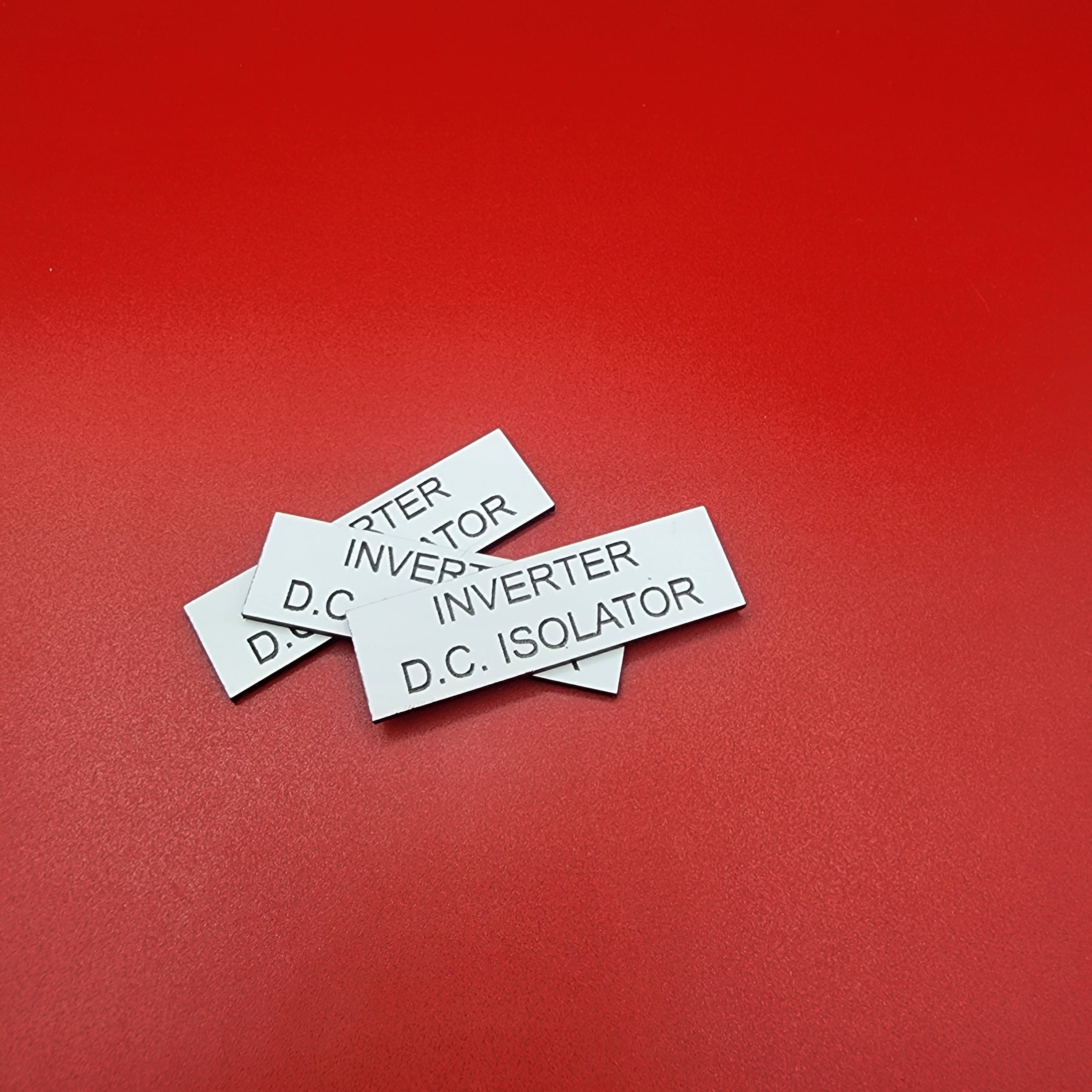
Every switchboard label that fades in a year, every bracket ordered in a batch of 500 because the supplier's minimum order forced it, every box of obsolete signage tossed out after a site rebrand — it all adds up. As Australian facilities come under growing pressure to cut waste and carbon footprint alongside cost, the way industrial labels, signs, and mounting hardware get made is quietly becoming part of that conversation. On-demand 3D printing and local Traffolyte engraving are proving to be some of the most practical tools for doing it.
The Waste Built Into Traditional Signage Supply Chains
Most commercial signage and labelling still follows a mass-production model: order in bulk to hit a minimum quantity, warehouse the surplus, and write off whatever doesn't get used before specs change. For a facility with dozens of unique circuit references, valve tags, or asset numbers, that model is a poor fit. Overordering means shelves of unused stock heading to a skip when equipment is decommissioned or renumbered. Offshore sourcing adds container freight, air shipping for urgent jobs, and packaging waste on top of the product itself.
None of this shows up on an invoice as "waste" — it just looks like normal procurement. But it's a real cost, both financially and environmentally, and it's one that on-demand, locally-made labelling avoids almost by default.
On-Demand Printing: Ordering Exactly What You Need
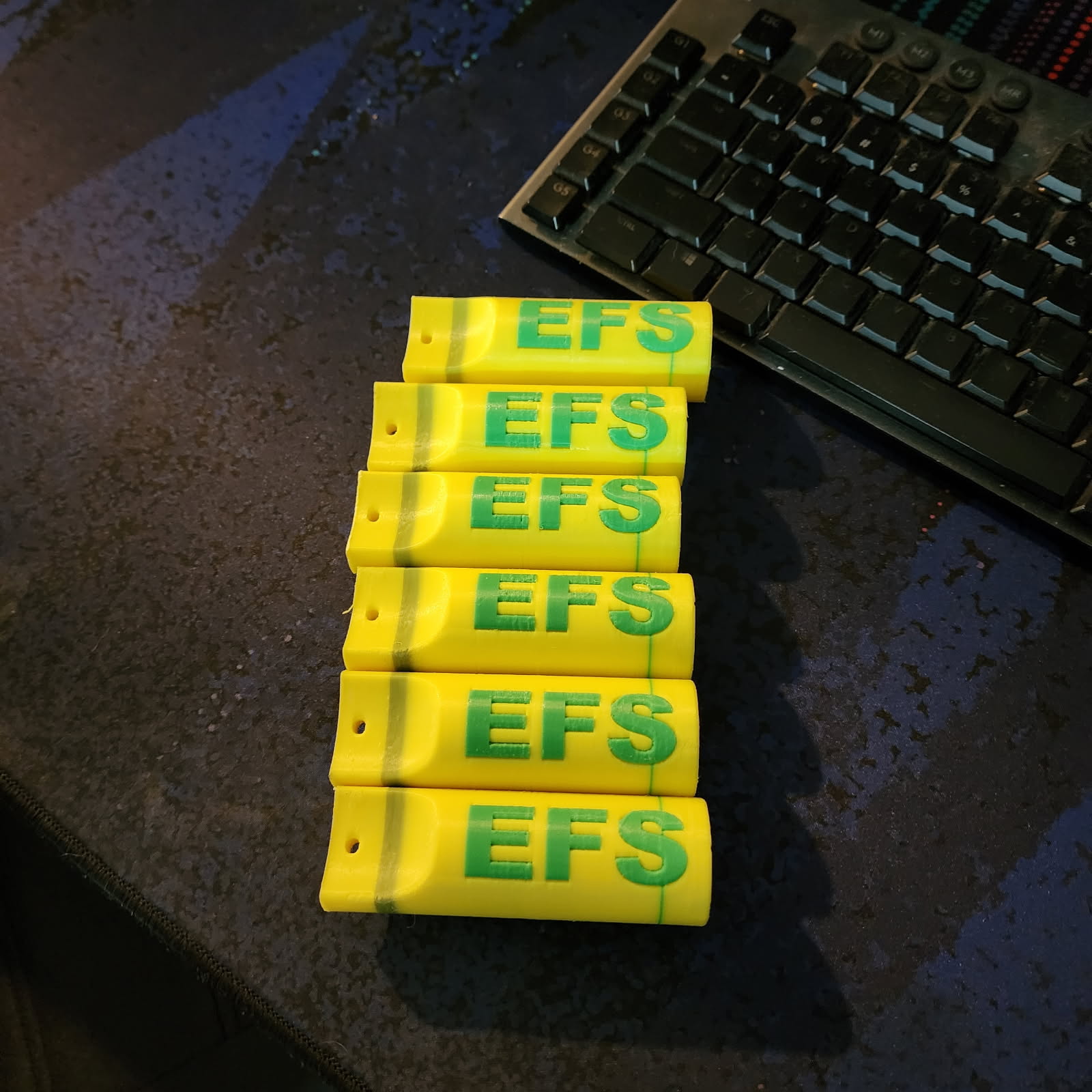
FDM 3D printing and laser-engraved Traffolyte share one underlying advantage: there's no tooling, no plate setup, and no minimum run to justify. A single bracket, one replacement valve tag, or a short run of ten switchboard labels costs the same per-unit logic as a run of a thousand. That means facilities can order precisely what a job needs — not what a supplier's minimum order quantity dictates — with nothing left over to store, track, or eventually discard.
This has a second, less obvious benefit: durability reduces demand at the source. A laser-engraved Traffolyte label doesn't fade, peel, or need replacing every couple of years the way a printed adhesive sticker does. Over the working life of a switchboard or a piece of plant, one durable label can do the job of several disposable ones, cutting material use and site visits at the same time.
Recycled and Lower-Impact Filaments Are Closing the Gap
Filament suppliers have made real progress on recycled and bio-based materials in the last couple of years. Recycled PETG (often labelled rPETG) and post-industrial regrind ABS blends now print with mechanical properties close enough to virgin material for most non-structural signage, brackets, and enclosures — impact resistance, layer adhesion, and dimensional stability are all within a workable range for label mounts, clips, and equipment tags. For jobs where absolute peak strength isn't the deciding factor, specifying a recycled-content filament is now a genuine option rather than a compromise.
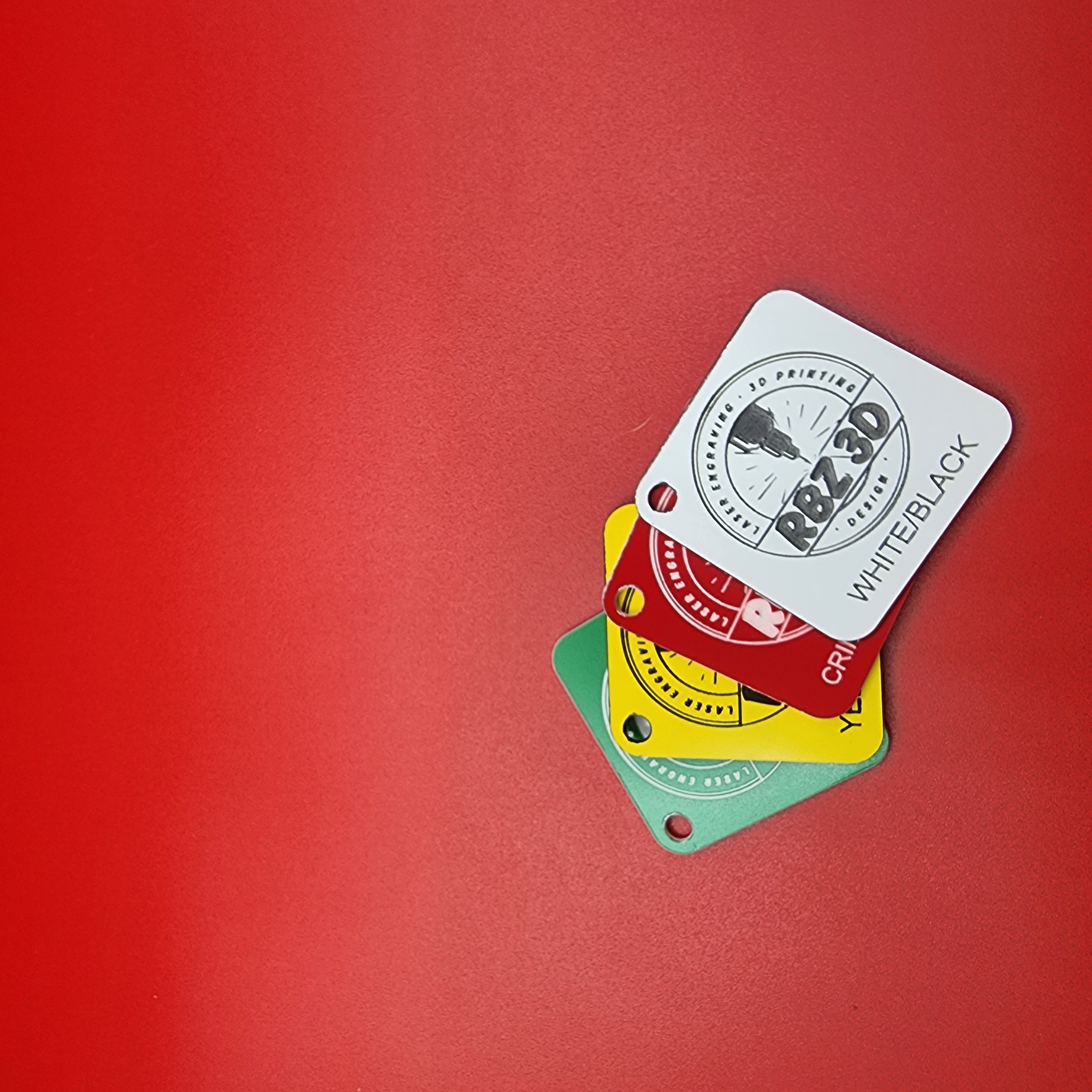
The same logic extends to Traffolyte: offcuts from larger sheet jobs get used for smaller labels and sample packs rather than binned, and because the material itself doesn't rely on ink or adhesive to stay legible, there's no consumable ink cartridge or backing paper waste generated during production.
Local Manufacturing Cuts the Freight Footprint
A label or bracket made in Townsville and shipped to a site in North Queensland travels a fraction of the distance of one imported in bulk from an overseas signage factory. That's a smaller freight footprint, but it also translates into fewer failure points: less handling, fewer transit delays, and less chance of a job going ahead with the wrong spec because a bulk overseas order couldn't be adjusted after the fact. Faster local turnaround also means fewer rush air-freight orders — historically one of the least sustainable ways to get signage onto a site in a hurry.
Right-Sizing Your Next Label or Print Run
A few practical habits go a long way toward keeping a labelling or 3D printing project lean:
- Order to the job, not the pallet. Configure exact quantities and sizes in the RBZ 3D Label Designer instead of rounding up to hit a bulk discount you don't need.
- Choose durable materials for long-life applications. Traffolyte for anything that needs to outlast the equipment; ASA or PETG for outdoor 3D printed brackets and enclosures that will spend years in the sun.
- Ask about recycled-content filament when it's a good fit for the part — mention it on your 3D printing quote and we'll confirm whether it works for the application.
- Batch small jobs together where possible, so a single print run or engraving session covers several needs at once instead of multiple short trips to the workshop.
None of these steps require compromising on compliance or finish — they're just a more deliberate way of specifying a job that was probably going to be over-ordered by default.
Built to Last, Made Close to Home
Sustainability in industrial labelling isn't really about a single eco-friendly material — it's the combination of ordering only what's needed, choosing materials that last, and manufacturing close to where the parts are used. That's the same approach RBZ 3D has always taken for practical reasons — faster turnaround, no minimum orders, labels that don't need replacing every year — and it happens to line up well with lower waste too.
If you've got a labelling or 3D printing job coming up, start with the online label designer for switchboard and Traffolyte labels, or run your STL through the instant 3D printing quote tool for brackets, mounts, and custom parts. For anything more specific — recycled filament options, a mixed job of labels and printed hardware, or a large facility audit — the Quick Quote tool gets a tailored answer from our Townsville workshop within a day.